Will the Supreme Court Kill Section 230?

avatar

The Most Important Thing

risk is largely a matter of opinion

Jerome Cody's profile picture on Select App
JC

Jerome Cody

·4 years ago
shared a poll post in group #The Most Important Thing
[Group Prediction] Section 230, the rule that made the modern internet, has been under scrutiny in recent years, with politicians across the political spectrum calling for it to be revoked or modified. With the Supreme Court hearing the Gonzalez v. Google case, something may finally happen here. Vote your prediction (👍 Let it Stay, 👎 Has to Go), and comment your preference!
 
avatar

Jerome Cody

A bipartisan group of lawmakers has just reintroduced a bill in the Senate1 and the House2 to sunset Section 230 of the Communications Decency Act, aka the Internet’s First Amendment,3 by the end of 2026. #Digital Wellness đŸ“±đŸ§˜ As Fight’s Lia Holland put it: “If this bill passes, 2026 will be the year that online protest movements die.” without Section 230, movement organizing will be censored. Groups like Indivisible, No Kings, 50501, or ICE out of Home Depot use social media to get out information, organize rallies, share resources, and connect with each other. If we lose Section 230, there will be a purge of Bluesky accounts, Facebook groups, and most of the other tools organizers use online, too. What’s more, losing Section 230 will destroy abortion speech6 online, and lifesaving LGBTQ+ resources as well.7 Activists have been warning for years that repealing Section 230 is a horrible idea. Without it, tech billionaires will be able to sue away any online video, protest flier, or other speech they don’t like, and tech billionaires will also proactively censor speech on their platforms like Instagram, Facebook, and TikTok so that they don’t get sued.8 Democrats like to say that they are trying to sunset Section 230 as a way to rein in Big Tech, when really the loss of this law will give tech billionaires the right to silence us all. If they really wanted to rein in Big Tech, lawmakers would pass robust federal data privacy and antitrust legislation so that people would be protected online, and have real choices beyond the billionaires’ club. forgeorganizing.org/artic..
How the First Amendment of the Internet Underpins Modern Activist Movements - The Forge

forgeorganizing.org

How the First Amendment of the Internet Underpins Modern Activist Movements - The Forge

Section 230 of the Communications Decency Act has drawn the ire of Democrats for years—but without it, decentralized mass protest would be near-impossible. The US protest movements of 2025 will be cha

 
avatar

Bobby

n case recent attempts to repeal Section 230 still feel like a vague, far-off threat, I’m here to be the bearer of bad news. Removing this crucial law protecting our freedom of speech online would upend nearly every corner of the Internet, including yours, turning our online spaces into a heavily censored, Big Tech-dominated landscape If these attacks succeed, we could lose: 1. All critique of major public figures 2. Critique of sitting and past US presidents 3. Naming anyone in the Epstein files 4. Wikipedia 5. Abortion care info, Planned Parenthood 6. BlueSky, UpScrolled, other alternatives to Big Tech 7. Campaigns for missing and murdered Indigenous women and girls 8. Independent journalism (say goodbye to 404 Media
) 9. Criticism of Israel, and all genocidal regimes 10. Protest announcements 11. GoFundMe’s supporting families impacted by ICE 12. Bail funds, abortion funds, and gender affirming care funds 13. eBay 14. Disability justice and online disability support groups 15. Solidarity with Palestine, Ukraine, Sudan, Congo, and more 16. Forums sharing healthcare or political info 17. Saying the word “fascism” online 18. Organizing against ICE 19. Yelp reviews 20. Resistance against Flock and creepy surveillance companies 21. Queer and trans influencers, Black and brown creators 22. News about sexual assault allegations 23. Criticism of Mark Zuckerberg and Jeff Bezos 24. YouTube comments 25. The Internet Archive (bye bye Wayback Machine!) 26. AO3 and other fanfiction libraries 27. Political streamers That’s a lot, but not even the whole list. Section 230 protects nearly everything we need and love about the modern Internet. If lawmakers succeed in repealing it, anything we post that companies think could get them sued would be pre-screened and removed. Companies that do continue to platform our speech risk being sued out of existence, especially smaller, democratized platforms. Sunsetting Section 230 would create a sanitized Internet where naming our abusers, talking politics (on any side), and even writing fanfiction is unthinkable. There are some well-meaning folks who have fallen for the convenient narrative that repealing Section 230 would magically fix everything wrong with the Internet. The truth is much scarier: that by keeping us all focused on Section 230, lawmakers are paving the way for increased power for Big Tech companies, while disguising a distraction as tech accountability. These same lawmakers have allowed us to become the building blocks of a data empire gone utterly unchecked. That’s why we’re decades behind on actual solutions like breaking up Big Tech monopolies and comprehensive privacy legislation that could actually change the Internet for the better. The hyper focus on Section 230 sets us even further back. #Digital Wellness đŸ“±đŸ§˜ thehill.com/newsletters/t..
Section 230 fight is back

thehill.com

Section 230 fight is back

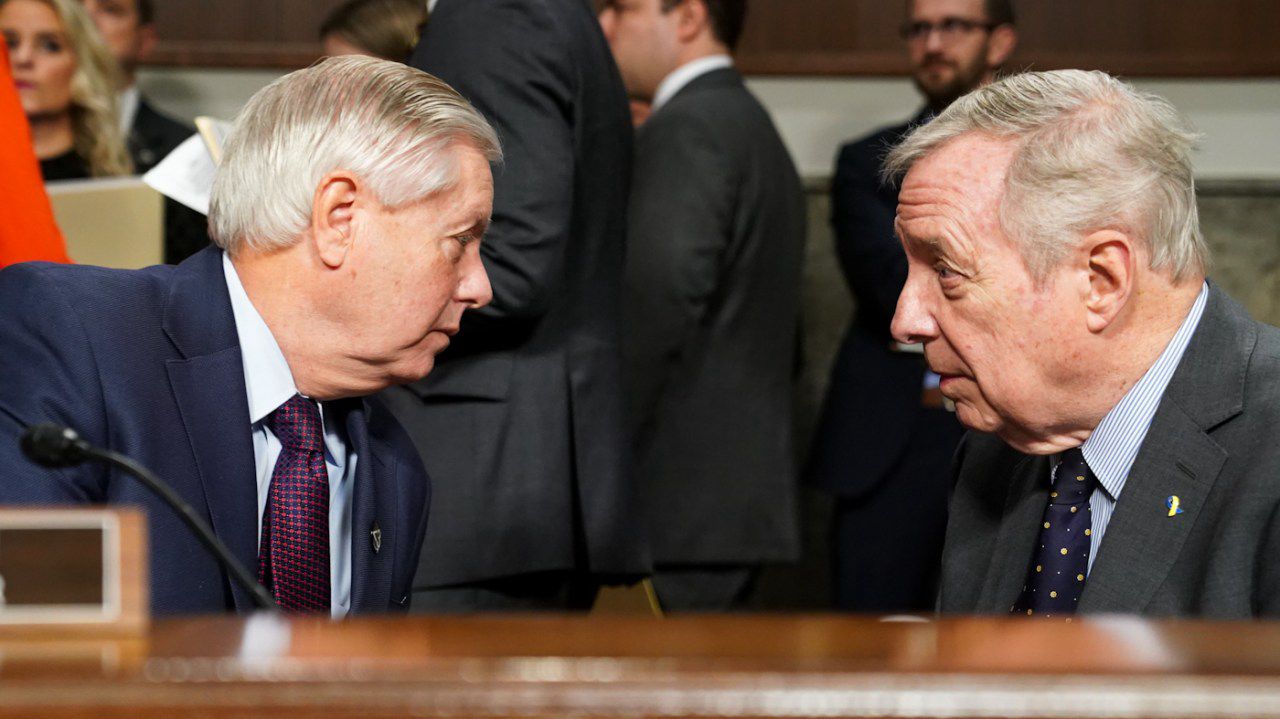
{beacon} Technology Technology   The Big Story  Senators introduce bill to sunset tech liability shield Sens. Dick Durbin (D-Ill.) and Lindsey Graham (R-S.C.) introduced the Sunset Secti


Nate

A jury in New Mexico found that Meta wilfully violated the state’s consumer protections laws and misled users about the safety of its platforms, ordering the company to pay $375 million in damages. #Digital Wellness đŸ“±đŸ§˜ The lawsuit, brought by New Mexico Attorney General RaĂșl Torrez in 2023, followed an undercover investigation in which Meta platforms allegedly inundated a fake profile of a 13-year-old girl with “images and targeted solicitations” from child abusers. The suit in New Mexico is the first to reach trial in a series of social media lawsuits. Jurors are still deliberating over a separate trial in Los Angeles over whether Meta and YouTube knew the design of their platforms inflicted harm on their younger users. TikTok and Snap settled in that case rather than risking a trial. Social platforms have long been able to avoid liability in cases where users experience harms by citing Section 230 of the Communications Decency Act, which shields them from the consequences of what other users post. The New Mexico case represents an effort to target the design of the system rather than the individual posts. It’s not any one Instagram Reel that causes you to develop an eating disorder, this argument goes; it’s that Meta’s recommendation algorithms see that you enjoy watching them and serve you more of them (including via push notifications) until you do. This was a relatively fringe legal theory until recently. The New Mexico verdict suggests it may be a winner — which has huge implications for liability for other platforms that host user-generated content. cnbc.com/2026/03/24/jury-..
Meta must pay $375 million for violating New Mexico law in child exploitation case, jury rules

www.cnbc.com

Meta must pay $375 million for violating New Mexico law in child exploitation case, jury rules

Jury reaches a verdict in New Mexico trial in which the state's attorney general alleged that Meta failed to safeguard its family of apps from child predators.

 
avatar

Cyril

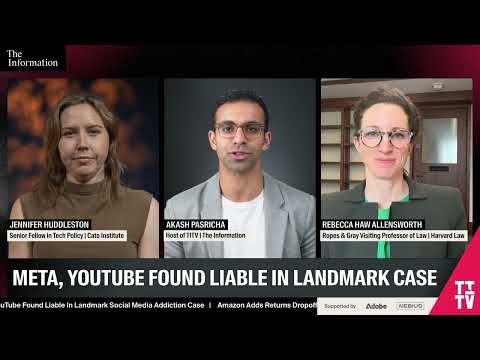
It was a brutal day on Wall Street—particularly for shares of Meta Platforms, Reddit and Snap. While the Nasdaq dropped 2.4%, shares of the social media firms plunged between 8% and 10% as the implications of Wednesday’s verdict in the social media addiction lawsuit sank in. That verdict, which found Meta and Google’s YouTube liable for negligence, didn’t concern either Snap or Reddit, mind you. Snap had settled before the trial and Reddit was never involved. But investors seem to be more worried about what the legal precedent means for small internet firms. “This is a hugely consequential decision, not just for these two companies involved, but for social media more generally,” said Jennifer Huddleston, senior fellow in tech policy at the Cato Institute. #Digital Wellness đŸ“±đŸ§˜ The decision ripped away the immunity internet firms have long enjoyed for liability over what people post on their platforms. That creates a worrisome overhang for investors looking at the sector. If anyone can sue internet firms for what they see on their sites, where will it end? youtube.com/watch?v=VtJVH..
Inside Meta & YouTube’s Social Media Addiction Lawsuit

www.youtube.com

Inside Meta & YouTube’s Social Media Addiction Lawsuit

Harvard Law’s Rebecca Haw Allensworth and Cato Institute's Jennifer Huddleston break down the landmark ruling finding Meta and YouTube liable for social media addiction. They explore how this "bellwether" case could bypass Section 230 by focusing on product design rather than content. Read more: https://www.theinformation.com/newsletters/the-briefing/metas-future-value-social-media-verdict Subscribe: https://www.theinformation.com/subscribe_youtube The Information’s TITV airs weekdays on YouTube, X and LinkedIn at 10AM PT / 1PM ET. Or check us out wherever you get your podcasts. Follow us: X: https://x.com/theinformation IG: https://www.instagram.com/theinformation/ TikTok: https://www.tiktok.com/@titv.theinformation LinkedIn: https://www.linkedin.com/company/theinformation/


Tasia

Section 230 still matters and should not be casually gutted but it also should not be treated as untouchable when platforms use design patterns that amplify harm at scale. you can preserve Section 230 and online speech protections while still cracking down on manipulative social-media design features that increase harm, especially for kids.  How about starting with “harm reduction” aimed at low-value engagement features rather than sweeping limits on what users can say or see? platformer.news/social-me..
Can you have child safety and Section 230, too?

www.platformer.news

Can you have child safety and Section 230, too?

The verdicts in last week’s social media trials have alarmed open-internet advocates. But it’s possible to regulate platform design while also protecting speech

Embed post to a webpage :
<div data-postid="pbnv" [...] </div>
Powered bySelect·iOS·Android
Privacy|Terms|